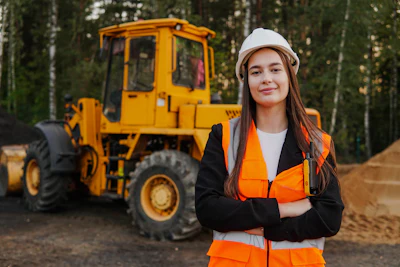
According to the numbers, women in construction are currently at their most visible in two decades. But if this is true, where exactly are they? While at their peak, women still make up only 11% of the U.S. construction workforce. Despite what may be progress in the field, there’s a long way to go, especially as the ongoing labor shortage and rising demand for infrastructure continue to stand at a crossroads.
Less than a year ago, more than 90% of contractors reported difficulty filling positions and major project delays due to a lack of workers. Amid this existing issue, nearly half (41%) of current skilled workers are also predicted to retire in the next five years. You would think with this critical shortage of boots on the ground, women’s advancement in the industry would be a piece of cake.
But when most people think of a career in construction, their mind immediately goes to a man in a hard hat with a hammer – a figure of strength both physically and mentally. This false vision of what it means to work in construction is harmful in multiple ways, specifically for women already in the industry and those eager to establish a career.
Looking Beyond the Stereotypes
STACK recently released its State of Women in Construction 2026 Report, which revealed some startling statistics about women in the industry. Among those is that nearly three-quarters (73%) of female respondents had experienced bias on the job.
That bias was reported in many forms and across many positions, from 44% of women in C-suite positions noticing coworkers being more averse to their suggestions vs. male counterparts’, to 32% of Gen Z women being forced to wear equipment on the job site that didn’t properly fit them.
This standard we’ve set about what it means to work in construction keeps these biases alive, obscuring just how dynamic and wide-ranging a career in construction can be, and how women fit in. As the industry continues to digitize, there are a multitude of opportunities for women with greater variety than traditional job site roles. Positions in preconstruction, strategy, management, etc. are all equally as valuable to the industry’s success and growth, yet not discussed as broadly.
It’s Not a Talent Pipeline Issue, It’s a Retention Roadblock
While a clear opportunity exists for women in the field, whether they want to be builders or behind the scenes, landing the job is only half the battle. Women who choose to join the construction industry are naturally already strong-minded, determined professionals, tackling additional barriers in an old-fashioned sector that start as soon as they enter. However, no matter how resilient, you can only face so many obstacles in your day-to-day work before being weighed down and looking to pivot.
A huge issue that’s not discussed enough in the industry is advancement. 60% of female respondents to STACK’s survey reported struggling to advance in the field. This is because there are rarely clear-cut roadmaps showing what employees need to do to reach the next step in their careers. Without these actionable, laid-out goals, things like promotions or high-profile project offers can often be discussed in informal after-hours spaces where women aren’t always invited (i.e., weekends on the golf course or nights at the bar).
If we’re not making it easy for women to see their impact and how they can advance in the field, they’re not going to stay.
The Vitality of Leadership’s Advocacy
It’s a hard pill to swallow, as a woman in the industry, when I hear the general consensus that the field isn't one most would gravitate toward. However, it’s not just outsiders commenting in ignorance – our report found 35% of male and female respondents in the C-Suite believe that construction will never be an ideal industry for women to participate in.
From my experience, there’s an unspoken test for women in construction when they walk into the room, regardless of their seniority. I’ve been mistaken multiple times for someone in a supporting role rather than a decision-maker. I’ve also felt significant pressure to prove my technical knowledge to male peers in the same space, though they never appear to feel this weight.
Because I’ve experienced this dynamic personally, I’m very intentional about how I hire, mentor, and advocate for women on my team. I never want someone to feel like they must earn basic credibility to contribute. And more importantly, with 20% of female respondents reporting they feel most unsafe on the job when not reporting harassment and/or safety concerns out of a fear of losing their job, it’s gone from a “boy’s club culture” to an urgent concern for workers’ wellbeing.
Given the lack of women in the industry, there are rarely women in leadership positions who can advocate for more junior-level staff. This guarantees that networking spaces and management are filled with men, often from older generations, who are so used to how the industry functions that they don’t even recognize the bias festering within. We need more women who can actively sponsor and advocate for other women, serving as positive role models that encourage them to grow, speak up and feel safe doing so. And both men and women in leadership have a responsibility to adopt new models and integrate technology that advances women’s growth, enabling defined processes and next steps.
The Future of the Industry
While there’s a lot of room for improvement, I’m excited to see change. There are so many opportunities for women to grow and flourish in the industry, and the construction field needs their skills now more than ever.
The more we openly discuss these cultural issues and address them head-on, creating actionable steps to correct and adapt, we’ll gradually create an environment over the next few years that nurtures women along with the new wave of talent in younger generations.
But it all starts from the top down, with leadership making an effort to create these safe spaces and promote inclusion both on and off the job site. Nobody should ever be hesitant to report how they’re feeling, whether it’s harassment from another employee or other factors weighing on their mental health. As the industry continues to adopt new technology, I’m optimistic that how we track and ensure safety will improve and empower all employees to speak up.
Women’s ability to make an impact shouldn’t be confined to the job site, as the lack of women in estimators, project managers, and data analyst roles is also fueling today’s labor shortage. I hope that very soon we can celebrate a new record high of women’s visibility in the field, and that the 11% one day becomes a mere reminder of how far we’ve come.