Cindy Powell didn't set out to build a career in asphalt. In fact, twenty years ago, she was a single mom running a barbecue restaurant in Alabama, doing everything from cooking and smoking meat to accounting and payroll. But the long hours left little time for her son, so Powell decided it was time for a change.
"There just wasn't enough time for my son, and he was the most important thing," Powell said.
She found that change at East Alabama Paving, a small, family-owned asphalt company that gave her the opportunity to build a career while still being present for her son.
“I wouldn’t necessarily say asphalt is a typical job," Powell said. "It's definitely not a 9 to 5er, but there is something very special about it.”
What began as a practical career move soon became something much bigger. Powell's work eventually brought her to the NCAT Test Track, where she worked alongside Buzz Powell, then associate director of the test track and now her husband. The experience introduced her to the research and innovation happening within the asphalt industry and sparked a curiosity that continues to shape her career.
"He was my mentor when I came into the industry," Powell said of Buzz. "We worked side by side working out problems, and it really poured into me. 'You've got potential in this. You need to push this.'"
That encouragement helped Powell see asphalt as more than a job. She became increasingly interested in the research side of the industry and ultimately worked her way into an engineering role despite not having an engineering background.
"It really sparked interest in me in the research side," she said. "That really hooked me in and turned this into a career for me, not just a job."
Always Looking for What's Next
Two decades later, it is the industry's constant evolution that continues to keep Powell interested.
“There’s always something new in asphalt," she said. "We’re never satisfied. It’s never just, ‘OK, we’re good. Let’s just coast along.’”
Powell now works with Verde Resources, focusing on more sustainable asphalt solutions. But her interest in sustainability doesn't mean abandoning traditional asphalt. In fact, Powell is quick to point out that conventional asphalt already has a strong sustainability story, particularly because of its recyclability.
“I think asphalt is traditionally already a very sustainable product," Powell said. "And then any way that we can be good stewards and improve that sustainability, I think that’s what just kind of drove me into the more sustainable-conscious aspect of the industry.”
For Powell, the opportunity is to build on those strengths and find ways to make an already sustainable material even better. She also wants contractors to see sustainability as something that can work alongside profitability rather than against it.
“Let’s satisfy both priorities. We can make it both profitable and sustainable, and be good stewards for the environment.”
That same collaborative mindset shapes Powell's vision for the future of the industry. She hopes traditional paving contractors and pavement preservation professionals will increasingly see themselves as partners working toward the same goal: extending pavement life and serving communities.
"Sometimes traditional paving contractors think that the pavement preservationists are not on the same page or they're not on the same team," Powell said. "And the reality is they are absolutely on the same team."
Powell sees particular opportunity for small municipalities with limited budgets. Rather than relying solely on major rehabilitation projects, preservation strategies can help communities get more life from the pavement they already have. She has also seen paving contractors create pavement preservation divisions to expand the services they can offer.
“If we could just get there, where in the future we know, ‘Hey we’re on the same team. We’re all here to make asphalt better,’ I think that would be amazing," she said.
Building a More Inclusive Industry
Powell's own leadership philosophy is built around that willingness to learn and work together. She describes the quality she values most as "humble confidence" — being confident enough to take on new challenges while recognizing that there is always more to learn.
"I'm not the best. There's a lot of things that I can learn. I learn new things every day," she said. "But you know what? I'm capable. I'm going to learn it. I'm going to expand it."
That philosophy has also influenced Powell's advocacy for women in asphalt. She was often one of the only women on a jobsite or in a meeting when she began her career, but she considers herself fortunate to have worked for a company that supported her development.
"I really did not have anyone working against me," she said.
Powell knows that hasn't been every woman's experience, which is why she is passionate about organizations such as Women of Asphalt. She sees the organization's work, along with women in prominent industry leadership positions, as an important way to show younger women that construction and asphalt can offer rewarding careers.
For women considering the industry, Powell's advice is simple.
"The most scary thing is just taking the first step," she said. "I'm going to steal from Nike and say just do it."
She also emphasizes the support system available to women entering the field.
“There are other women in the industry. I’m here. I’m going to help you. I’m going to push you. I’m going to encourage you. We will all do that," Powell said.
Asphalt Runs in the Family
To Powell, the asphalt industry has a sense of community that isn't always apparent from the outside.
"The asphalt industry by far is like family," she said. "We sit down. We break bread together."
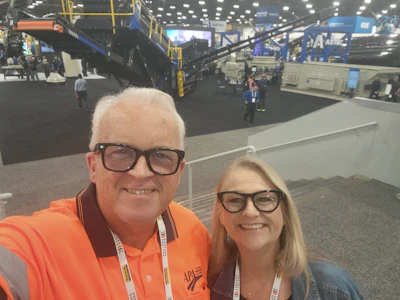
That family includes Buzz, who has remained one of Powell's biggest professional supporters. The two met through their work at the NCAT Test Track, became friends and colleagues, and eventually married in 2020. Their shared careers mean asphalt tends to follow them home, too.
"We do talk an awful lot about asphalt," Powell said. "There's always a conversation around asphalt in our house. Thanksgiving, there's asphalt around the table. We really are all things asphalt."
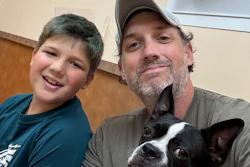
Family is also at the center of another accomplishment Powell considers especially meaningful: her son followed her into the asphalt industry. He earned a degree in mechanical engineering from Auburn University and now works with Astec in Chattanooga building asphalt plants.
"As a parent, you kind of want your kids to follow your footsteps, or even be better than you are, and I feel like he's accomplished that," Powell said.
Still Learning, Still Leading
For all the recognition Powell has received throughout her career, she is reluctant to think of herself as an industry icon or even an expert. She sees herself as someone who is still learning and looking for ways to contribute.
"What I consider myself is a student," she said. "I want to learn. I want to know as much as I can."
That desire to keep learning is perhaps the thread running through Powell's two decades in asphalt. She entered the industry because she needed a job that would give her more time with her son. She stayed because she found an industry full of people, ideas and opportunities to grow.
Now, she wants to use what she has learned to help bring more people into that community, whether through sustainable asphalt, pavement preservation, industry collaboration or opportunities for women.
"I want to continue to promote Women of Asphalt," she said. "I want to promote healthy, sustainable asphalt, and I want to promote pavement preservation and all of those industry avenues coming in with traditional asphalt paving. There is a way for all of us to work together to make asphalt pavement as good as possible for taxpayers.”
For Powell, the future of asphalt isn't about choosing one approach over another. It's about continuing to ask the question that has kept her engaged for 20 years: How can the industry be better?